Poland has signed a new support framework for biomethane. For an investor the first questions are practical: where is the site, does the gas grid have capacity there, and who controls the land? We help you answer them — site screening, land control, zoning and grid-connection procedures — under a development services agreement. We do not acquire land, build or operate plants.
The Act of 4 September 2026 amending the Renewable Energy Sources Act (RES Act) was published on 16 October 2026 (Journal of Laws 2026, item 1347). The points below are taken from the published text.
The President of the Energy Regulatory Office (URE) announces and runs biomethane auctions at least once a year. Plants are grouped by electrical-equivalent capacity — below 2 MW and from 2 MW — converted using a 41% cogeneration efficiency. Winning offers are the lowest prices, within the volume announced; the Act also caps winners at 80% of the volume covered by all offers.
A winning producer is entitled to cover a negative balance for 20 years from the first sale after the auction session, and not beyond 31 December 2054. Investment aid received (for example a grant) reduces the price offered in the auction.
Biomethane must meet the sustainability criteria, and the plant must have a separate unit for injecting biomethane into the gas network. Biomethane production equipment installed during construction must have been manufactured within the 48 months before first production and must not have been depreciated before by any entity.
From 1 December 2026 a gas operator that cannot connect a biomethane plant at the requested location must state the nearest alternative location or the maximum available capacity at the requested one, with reasons and the investments needed. Provisions on direct gas pipelines for biogas and biomethane take effect on 17 October 2027.
Under the Act's penalty provisions, a winning biomethane producer that sells less than 60% of the volume stated in its offer in the settlement periods defined by the Act faces a financial penalty, subject to the exceptions listed there.
Producers with plants outside Poland may also bid, but only for 5% of the previous year's auction volume, and only if an intergovernmental reciprocity agreement is in place and cross-border capacity is reserved. Plants located in Poland use the standard scheme. We have not verified whether any such agreement exists.
Polska Spółka Gazownictwa (PSG), Poland's largest gas distribution system operator, describes the process on its “Ready for biomethane” page (checked 20 October 2026).

The application for connection conditions (connection group C) is answered within 90 days of a complete application. PSG's capacity map (data as of 25 August 2026) is indicative only: PSG states that it cannot be the basis for investment decisions, and that the connection conditions determine the capacity.
It must include a site plan at 1:500, 1:1000 or 1:2000, a company-register extract and a statement of the legal title to the property. Control of the site therefore comes before the grid application, not after it.
In medium-pressure areas capacity depends on how little gas customers take at the lowest point; on a high-pressure connection capacity limits do not occur or are incidental, but compression is required.
The connection fee is 100% of actual connection costs under PSG's tariff; the amount in the contract is an estimate and may change after the works. A separate cooperation agreement with PSG is required, and the producer's own measurement of gas quality is mandatory.
PSG cites the National Energy and Climate Plan (KPEiK) estimate of 3.2 bn Nm³ of biomethane potential in 2030. That is a planning estimate, not a measure of how many plants will be built. Sources: psgaz.pl; capacity map bioabs.psgaz.pl.

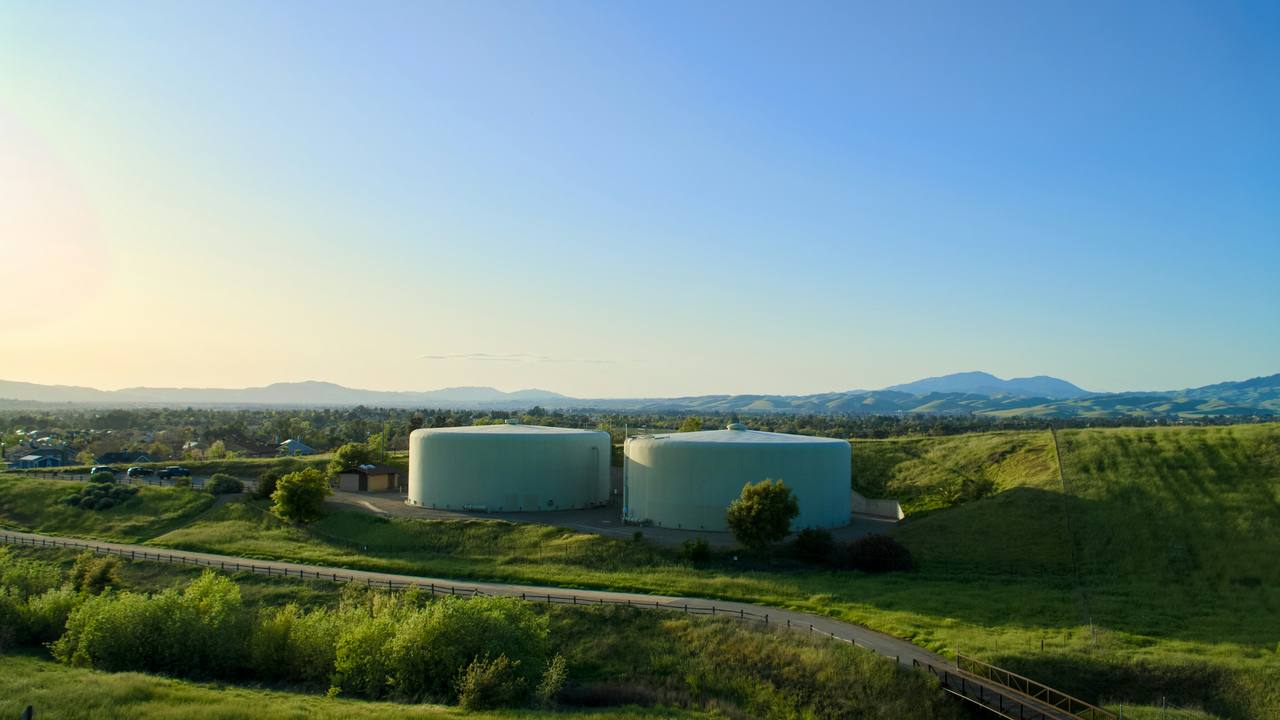
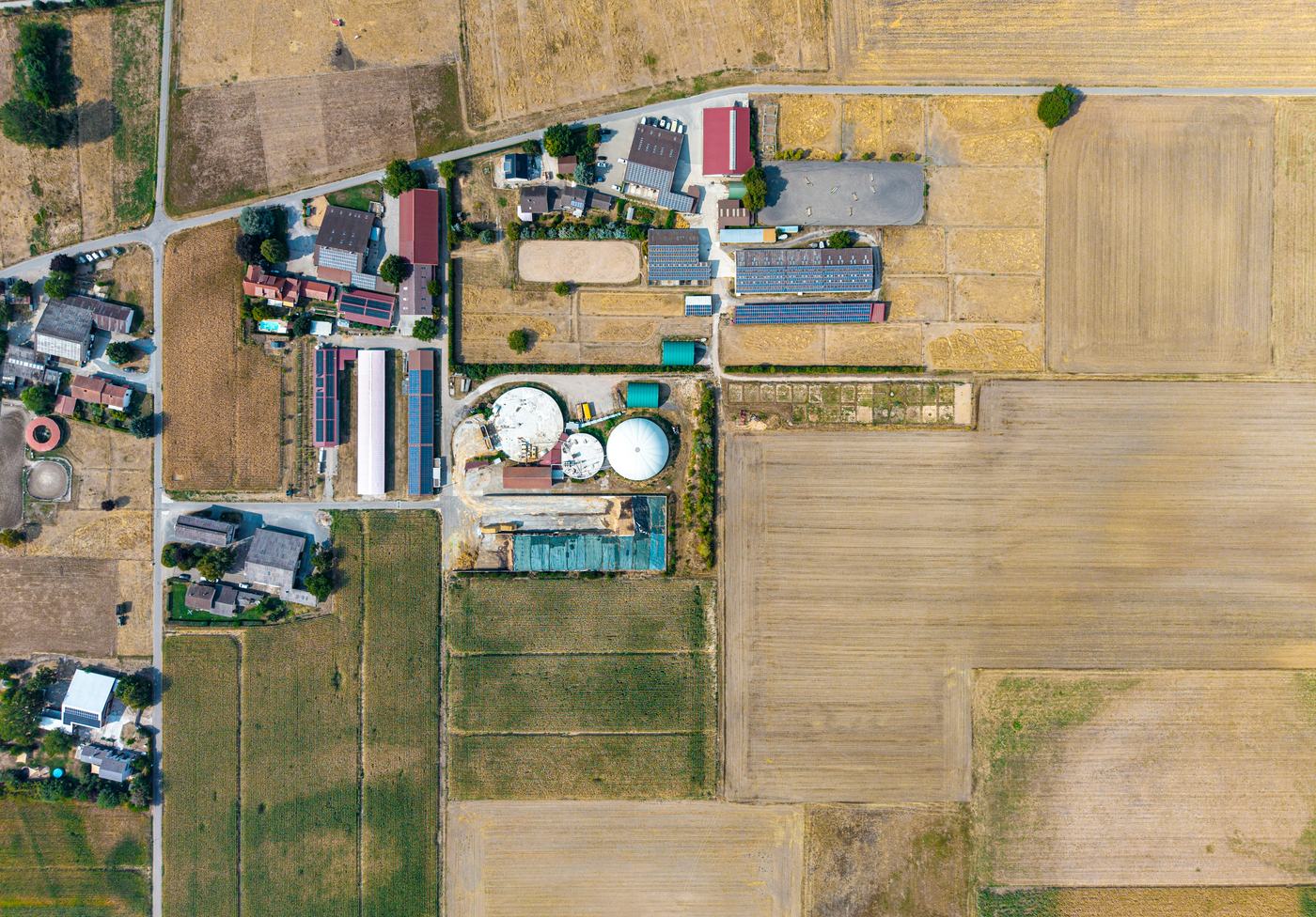
Photos: Bernd Dittrich / Unsplash (Unsplash License). Locations not stated; not Arena Energy projects.
For biogas and biomethane we apply the same service model we use for other projects.
Your criteria: biogas or biomethane, target scale, regions, stage, timing.
Candidate areas assessed against gas-grid, planning and land data; a shortlist with the basis for each site stated.
Owners approached, option and lease documented, register position checked.
Procedures with the municipality and the gas operator, reported against agreed milestones.
A site file for your team or project company.
Criteria and screening basis per site.
Owners, register position, encumbrances, easements.
Land, planning, grid, regulatory and local-acceptance risks, and what is still to be confirmed.
Indicative; dates depend on authorities and operators.
Fees are milestone-based under a development services agreement and paid on delivery: registered lease, final zoning decision, signed grid connection agreement, final building permit.
We cannot say. The provisions take effect on 17 February 2027, but apply only after a positive European Commission decision on state aid. Dates, volumes and reference prices are set in regulations.
The Act's special 5% track concerns plants located outside Poland and requires an intergovernmental agreement. Plants located in Poland use the standard scheme described above. Corporate and land-purchase rules for foreign buyers are separate; see our overview of farmland for foreign investors.
No. PSG states that the map is indicative and that only the connection conditions determine capacity.
Under PSG's tariff the fee is 100% of actual connection costs; the figure in the contract is an estimate and can change after the works.
No. We provide development services under a services agreement. We do not acquire land, build or operate plants.
Milestone-based fees under a development services agreement, paid on delivery.
A few lines are enough. Technology, scale and stage are optional.
Abbreviations. URE — Energy Regulatory Office. PSG — Polska Spółka Gazownictwa, gas distribution system operator. KPEiK — National Energy and Climate Plan. MPZP — local zoning plan. POG — municipal general plan. Nm³ — normal cubic metre.