Arena Energy — Resources
Knowledge, not promises.
Reliable, fact-based answers to the questions landowners ask most. No hidden catches, no marketing jargon.
Reliable, fact-based answers to the questions landowners ask most. No hidden catches, no marketing jargon.
Signing a contract for commercial energy production triggers an official change in land classification: part of the plot loses its preferential agricultural tax status. We explain this plainly.
This information is for educational purposes and does not constitute tax advice. It's worth consulting an advisor for your individual situation.
Every contract includes an unconditional obligation on the investor: dismantle the installation at their own cost and restore the land to agricultural condition.
Steel piles driven into the ground without concrete. After dismantling, the most valuable topsoil layer (humus) remains virtually undisturbed.
Used panels are electronic equipment (under the WEEE directive). Modern technologies recover almost all the material: glass, aluminium, silicon, silver.
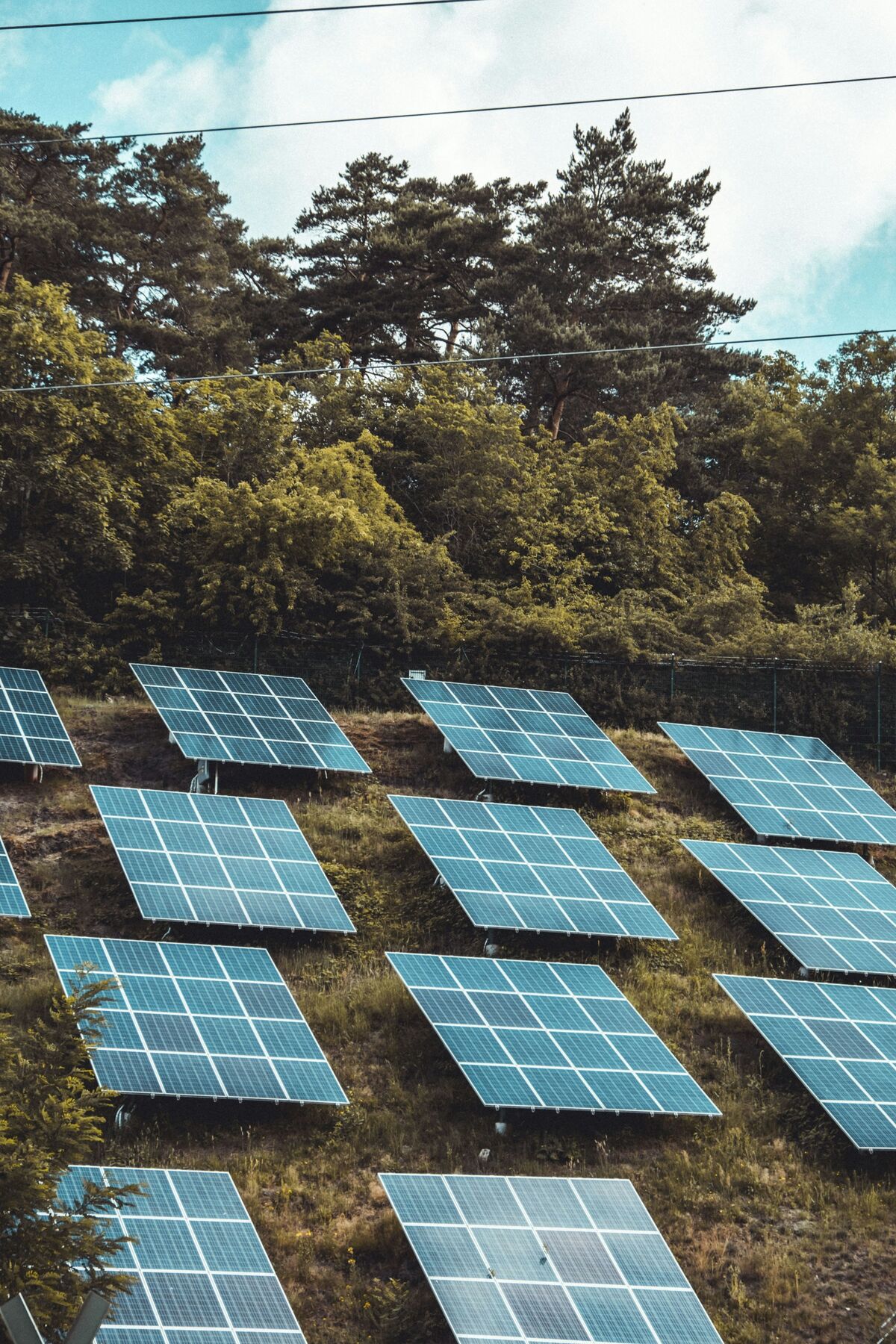
Panels prevent erosion and drying by retaining moisture. They are thermally neutral. Right at the edge, the natural ambient temperature prevails.
Wide-mesh fencing makes it easier for small animals to migrate, and months of environmental monitoring are carried out before a project's layout is finalised.
Land with a specific legal status. We handle inherited, cooperative, State Treasury, and religious institution properties, where, for example, leasing church land requires the consent of the diocesan bishop.
No. PV farms emit no harmful substances and no significant noise. The only, negligible source of sound may be a distant transformer station. Panels are thermally neutral. Already 1–2 cm from the edge, the natural ambient temperature prevails.
Modern anti-reflective coatings virtually eliminate the glare effect. This means farms can be safely sited even near national roads and active airports.
No. During the development period, which usually lasts 2–3 years, you can continue farming the land and receiving subsidies. Full rent rates usually begin once construction starts.
Contracts are signed for 25–30 years (the project's full life cycle). Rights and obligations pass to the heirs, and the lease becomes a stable, cross-generational income.
Current rates are typically 15,000–20,000 zł per hectare per year for well-located sites near a substation (GPZ), with annual indexation. You can estimate your indicative income using the calculator.
No. Submission and initial verification are entirely free and non-binding. Only after receiving an offer do you decide whether to continue discussions.