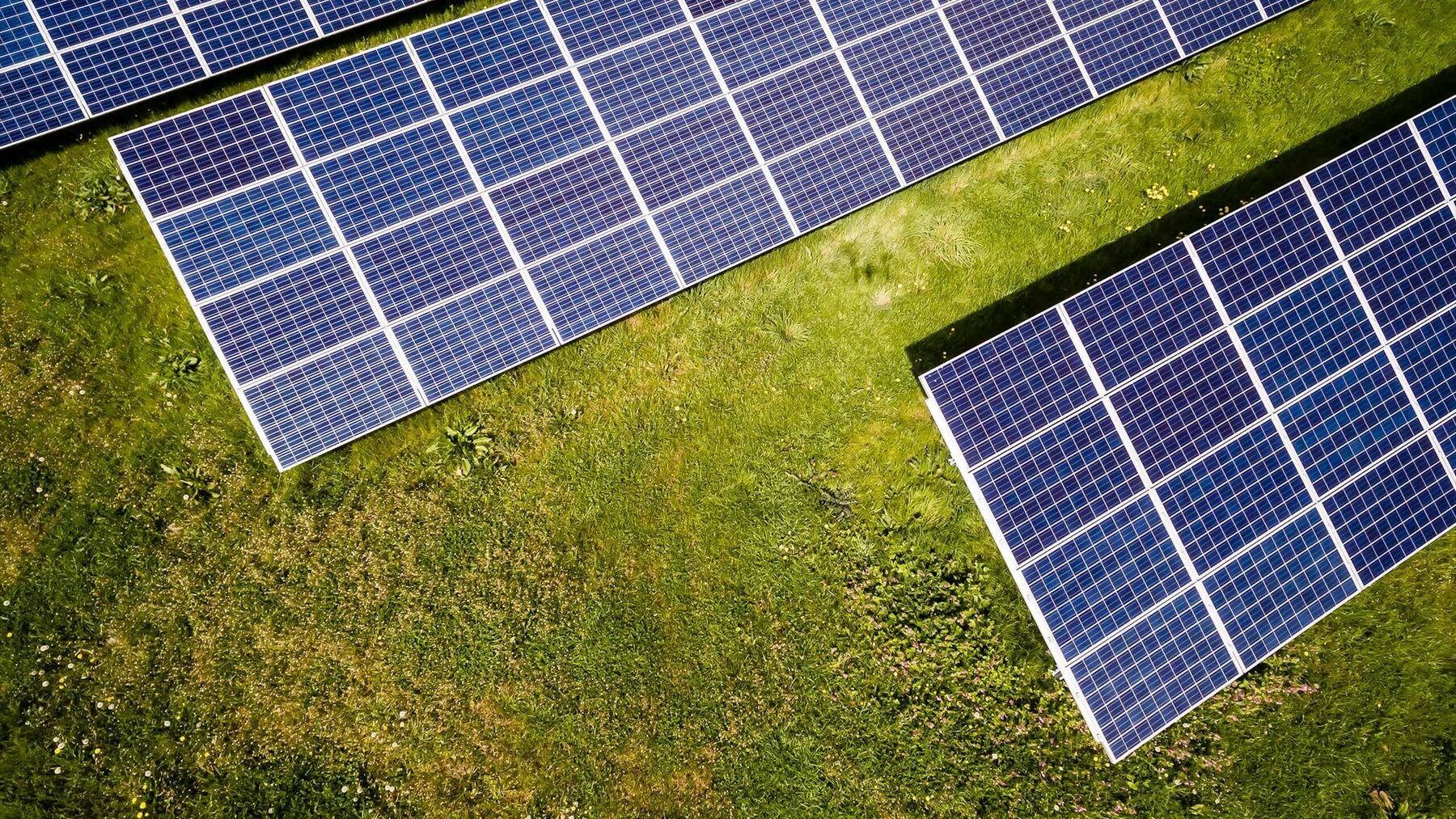
Photovoltaic farm on agricultural land
Arena Energy — Resources — Agricultural Land for Foreign Investors

Agricultural land in Poland: what a foreign investor does not need to buy.

Polish law strictly restricts trading in agricultural land, but barely restricts leasing it. Below: what actually blocks a purchase, when a permit from the Ministry of the Interior and Administration (MSWiA) is required, why the renewable energy market relies on leasing, and how much it costs to exclude land from agricultural production.

01 — Starting Point

You do not need to buy Polish agricultural land

This is the first misunderstanding we encounter in conversations with funds from Germany, Spain or France. Polish law strictly restricts trading in agricultural land, but it does not restrict leasing it. And for a renewable energy project, leasing is not only simpler: in practice it is the only realistic route for an entity from outside agriculture.

An investor does not need ownership, only the right to use the land for 29–30 years, the ability to run cables and access roads, and the security required by the financing bank. All of this can be achieved through a lease agreement.

  • Purchasing agricultural land ≥ 1 ha is, as a rule, reserved for an individual farmer.
  • An entity that is not a farmer needs the consent of the Director General of KOWR.
  • KOWR has a right of pre-emption for properties from 1 ha; it has 30 days to decide.
  • A 5-year obligation applies after acquisition to run the farm, together with a ban on transferring the property or its possession.
  • Leasing is not subject to these restrictions and that is why it is the market standard in renewables.
02 — Act on Shaping the Agricultural System

Why buying is difficult, regardless of nationality

Restrictions on trading agricultural land in Poland do not arise because an investor is foreign. They apply equally to a Polish company that is not an individual farmer.

Important case law: an intention to lease the land for a photovoltaic farm does not, on its own, constitute grounds for obtaining the Director General of KOWR's consent to transfer possession of the property before the 5-year period since acquisition has elapsed. The argument "I need lease income" is not sufficient.

03 — Foreign Entities

The MSWiA permit: when it is required

This is a separate regime, overlapping with UKUR. It derives from the Act on the Acquisition of Real Estate by Foreigners.

  • Entities from the EEA and Switzerland enjoy almost full freedom to acquire real estate in Poland.
  • Exceptions to this freedom nonetheless include properties in the border zone and larger agricultural land.
  • Agricultural land above 1 ha acquired by a foreigner requires a permit from the Minister of the Interior and Administration.
  • The permit takes the form of an administrative decision. This is a separate procedure, alongside any KOWR consent that may also be required.
  • The regimes are cumulative. Meeting the requirements of one act does not exempt from the other.

What is changing in 2026

On 2 June 2026, the Council of Ministers adopted and referred to the Sejm a draft amendment to the Act on the Acquisition of Real Estate by Foreigners and the Law on Notaries. The direction of the changes is to streamline oversight, chiefly by introducing an electronic system for notarial deeds transmitted by notaries to the MSWiA.

Separately, amendments to UKUR that took effect on 30 April 2026 extended the catalogue of close relatives to include, among others, a spouse's parents and step-parents.

The practical conclusion: regulations in this area change frequently. The legal position should be verified as of the date of the planned transaction, not on the basis of an analysis from a year ago.

04 — A Model That Works

How land is secured for a project in practice

The market standard in Polish renewables looks the same for an investor from Poznań and one from Madrid.

05 — Exclusion from Agricultural Production

Excluding land from agricultural production

Building an installation on agricultural land requires its exclusion from agricultural production. This requirement arises from Article 12 of the Act on the Protection of Agricultural and Forest Land. This is a separate procedure, conducted by the local county authority (starostwo powiatowe).

The cost depends on the soil quality class and consists of a one-off charge plus an annual fee equal to 10% of that charge, collected for 10 years. The procedure usually takes 2–3 months.

This is precisely why, in our plot selection criteria, we consistently point to classes IV, V and VI and to wasteland. This is not solely a matter of agricultural soil quality, but directly a matter of project cost.

See our plot selection criteria
  • Mineral soils of classes IV–VI are exempt from charges for exclusion from agricultural production.
  • Classes I–III generate a charge depending on class and area, and for the best classes, a change of use can be outright impossible without the minister's consent.
  • The exclusion covers the entire cadastral plot, not only the fragment actually occupied by the panels. This was confirmed by the Provincial Administrative Court in Łódź.
  • The annual fee is 10% of the one-off charge, payable for 10 years.
  • The one-off charge is reduced by the market value of the land being excluded.
06 — Our Role

What we do on the land side

We are not a law firm and we do not replace your advisers. What we do is prepare the land so that their work does not start with firefighting.

07 — Next Step

Considering entering the Polish market?

Tell us what location and scale you are looking for. We will prepare the land: legally clean, with the grid analysed and relationships with owners in order.

Let's talk about your project
08 — Sources and Disclaimers

Legal basis and the limits of this material

This material is based on the Act of 11 April 2003 on Shaping the Agricultural System, the Act of 24 March 1920 on the Acquisition of Real Estate by Foreigners, the Act of 3 February 1995 on the Protection of Agricultural and Forest Land, and on information published by the National Support Centre for Agriculture (KOWR) and the Ministry of the Interior and Administration (MSWiA). It takes into account the amendments to UKUR in force since 30 April 2026 and the draft amendment adopted by the Council of Ministers on 2 June 2026.

This is not legal advice. This material is for informational purposes and presents general principles rather than an assessment of a specific set of facts. Regulations on trading in agricultural land and on the acquisition of real estate by foreigners are frequently amended in Poland, and their application depends on the circumstances of the particular transaction, the ownership structure of the buyer, and the classification of the land. Before making an investment decision, you should seek the advice of a Polish legal counsel (radca prawny) or advocate (adwokat) and verify the legal position as of the date of the transaction.