
We source locations, secure them under contract, and guide them through the planning process, up to the stage at which you want to take over the project. For funds and developers entering the Polish market without their own structure on the ground.
The Polish energy storage market has stopped being a promise. In the main auction of the capacity market for delivery year 2029, storage facilities secured more contracts than the new gas-fired power plants the operator had counted on.
The clearing price of this auction was 264,90 zł per kilowatt per year, and total capacity obligations reached over 8 GW. Contracts went to, among others, PGE, Tauron, Energa, Columbus Energy and Unimot. For an investor, this means one thing: a storage facility in Poland now has a predictable, multi-year revenue stream that a financial model can be built on, not just a speculative bet on price arbitrage.
Foreign capital has already noticed. Industry press has reported portfolio transactions in the region of 1,3 GW and 5,2 GWh being concluded on the Polish market. Capital is ceasing to be the bottleneck; access to land with a realistic prospect of grid connection is becoming one instead.
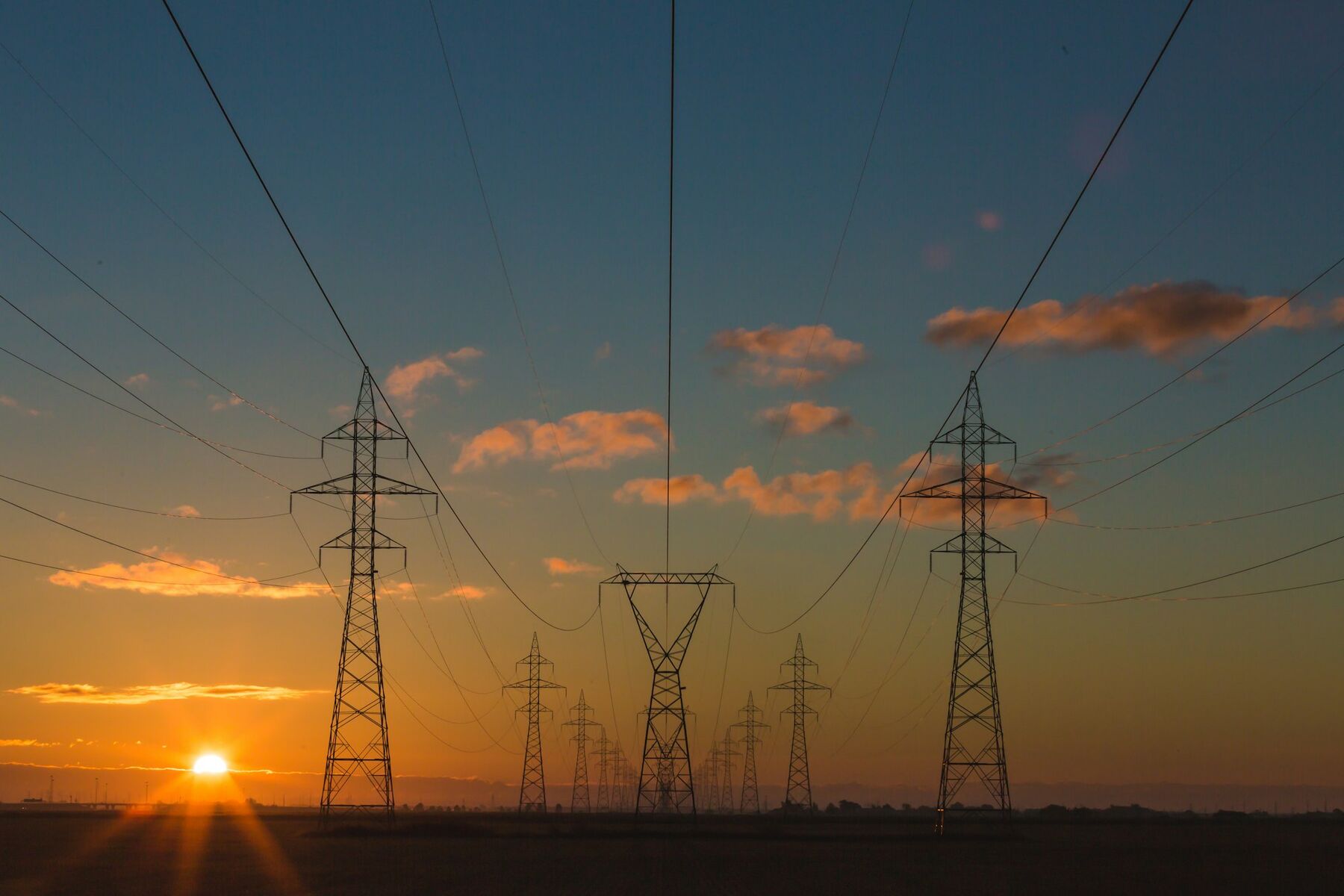
This is the most common mistake we see among entities entering the Polish market: carrying over criteria from PV projects. A storage facility needs several times less land, but is far more particular about where it stands and what it stands on.
A plot rejected as too small for a solar farm can be ideal for a BESS. And conversely: an extensive, cheap plot far from a substation may not be suitable for storage at all.
We don't sell a list of plots. We sell a location brought to an agreed stage of preparation: the stage at which you want to take it over.
We search against specific technical criteria, not against the availability of offers. We analyse the grid layout, distance to the substation, land class and bearing capacity, environmental and planning constraints, and ownership structure. We reject locations that have no chance of getting connected, before anyone spends a single złoty on them.
We negotiate and sign agreements with owners: a conditional lease, a preliminary agreement, or an option, depending on the project strategy. For projects covering a dozen or more plots, we consolidate them into a coherent package with uniform terms. Securing the land covers the right to carry out surveys, apply for decisions, build and operate, and, critically for the bank, to assign rights to the financing entity.
From secured land to a location with documentation: interpretation or amendment of the local zoning plan (MPZP), a planning permission decision (WZ), an environmental decision, an application for grid connection conditions, establishing a transmission easement and rights of way, and clearing up the legal status of the property. This is the stage at which the project gains the most value.
You take over the location at a stage you choose yourselves, from secured land through to a project with a full set of decisions. The handover structure depends on your requirements: assignment of rights from the agreements, sale of shares in a special purpose vehicle (SPV), or a mixed model.
The earlier, the lower the entry cost and the higher the risk. The later, the closer to a ready-made asset. We work across all of these models.
Land with a signed lease agreement or option, with a preliminary grid and planning analysis. You enter early and run the further development yourselves, benefiting from the fact the location is already off the market.
Secured land with procedures already under way: a filed application for grid connection conditions, an initiated WZ procedure or plan amendment, a started environmental procedure. Some of the risk is already removed, and the timeline is calculable.
A location with grid connection conditions and administrative decisions obtained, with a clean legal title and easements already established. Ready to move into the design and financing phase.
We set the scope and timeline of each stage individually. They depend on the location, the available connection capacity, and the planning situation in the given municipality. We don't promise deadlines we have no influence over, because decisions are issued by administrative bodies and network operators.
This is the situation we work in most often: the board has approved expansion into Poland, there's a budget and a volume target, but no team, no contacts, and no knowledge of the procedures. Building this from scratch costs quarters that usually aren't in the schedule.
We're the layer that lets you start building a portfolio from month one, before any decisions on your own structure in Poland are made, or instead of them.
Full offer for investors and developers →Storage is now our largest category of projects, from land secured under contract to locations with the planning process already under way.
We do not disclose investor names or exact locations, because we are bound by confidentiality agreements. Portfolio details, including technical parameters and the status of proceedings, are provided after signing an NDA.
A storage facility takes up far less space than a solar farm, so a plot rejected as "too small for PV" can be ideal for a BESS. We check locations free of charge and without obligation.
Rates are set individually for each location. Unlike solar, where the rent is calculated mainly from area, for a storage facility the value is determined by the power and capacity of the installation and the quality of the connection point itself. A plot with a small area but located right next to a substation can be worth more than a much larger site far from the grid. We present a specific proposal after a free verification of the location.
Much smaller than for a solar farm of comparable capacity. A storage facility is a compact, containerised installation with access roads and a substation, not an extensive field of panels. That's why plots considered too small for PV are often perfectly suited to BESS, provided they are close to the grid, which is a more important criterion here than area itself.
The closer, the better. Every kilometre of cable means cost and additional easements on other people's land. There is no single fixed limit, because the available capacity at a given grid point also matters. Proximity to a line doesn't guarantee connection, though: the line may be overloaded or require costly reconstruction. That's why we check not just the distance, but the real possibilities for connection.
Installations are designed in line with fire safety requirements, with appropriate setback distances, detection systems, and access for the fire service. A storage facility does not emit exhaust fumes or odours, and noise comes mainly from the cooling systems. Technical regulations for storage facilities are currently being amended, so every investment is designed according to the legal status in force on the day the permit is obtained.
During the preparatory period, before construction starts, usually yes, and the owner receives a lower reservation rent during this time. Once construction begins, the area occupied by the installation is taken over for the project and the full rate applies. The details are always set out in the agreement.
Give us your criteria: connection capacity, preferred region, expected handover stage. We'll come back with a list of locations that meet these conditions, or a realistic assessment of what's missing.
The results of the main capacity market auction for delivery year 2029, including the clearing price and the volume of contracts for energy storage, come from announcements by the Polish transmission system operator PSE (Polskie Sieci Elektroenergetyczne) and the Energy Regulatory Office (URE), as reported by industry outlets. Information on the capacity reserved under issued grid connection conditions comes from the Ministry of Energy (Ministerstwo Energii). Data on portfolio transactions comes from industry press reports.
Investment support for utility-scale storage facilities is provided by the National Fund for Environmental Protection and Water Management (NFOŚiGW) under a separate programme aimed at businesses, with capacity and capacity thresholds and periodic application rounds. It should not be confused with programmes for prosumers. The status and conditions of the current application round should be verified at the source on each occasion.
This material is for informational purposes only and does not constitute legal, tax, or investment advice. Regulations governing energy storage facilities, including technical and fire-safety requirements, are currently being amended, and some regulations remain at the draft stage. Grid connection conditions for each location are determined by the relevant network operator in an individual proceeding. Before making an investment decision, the legal status as of the relevant date should be verified and the advice of a Polish legal adviser should be sought.