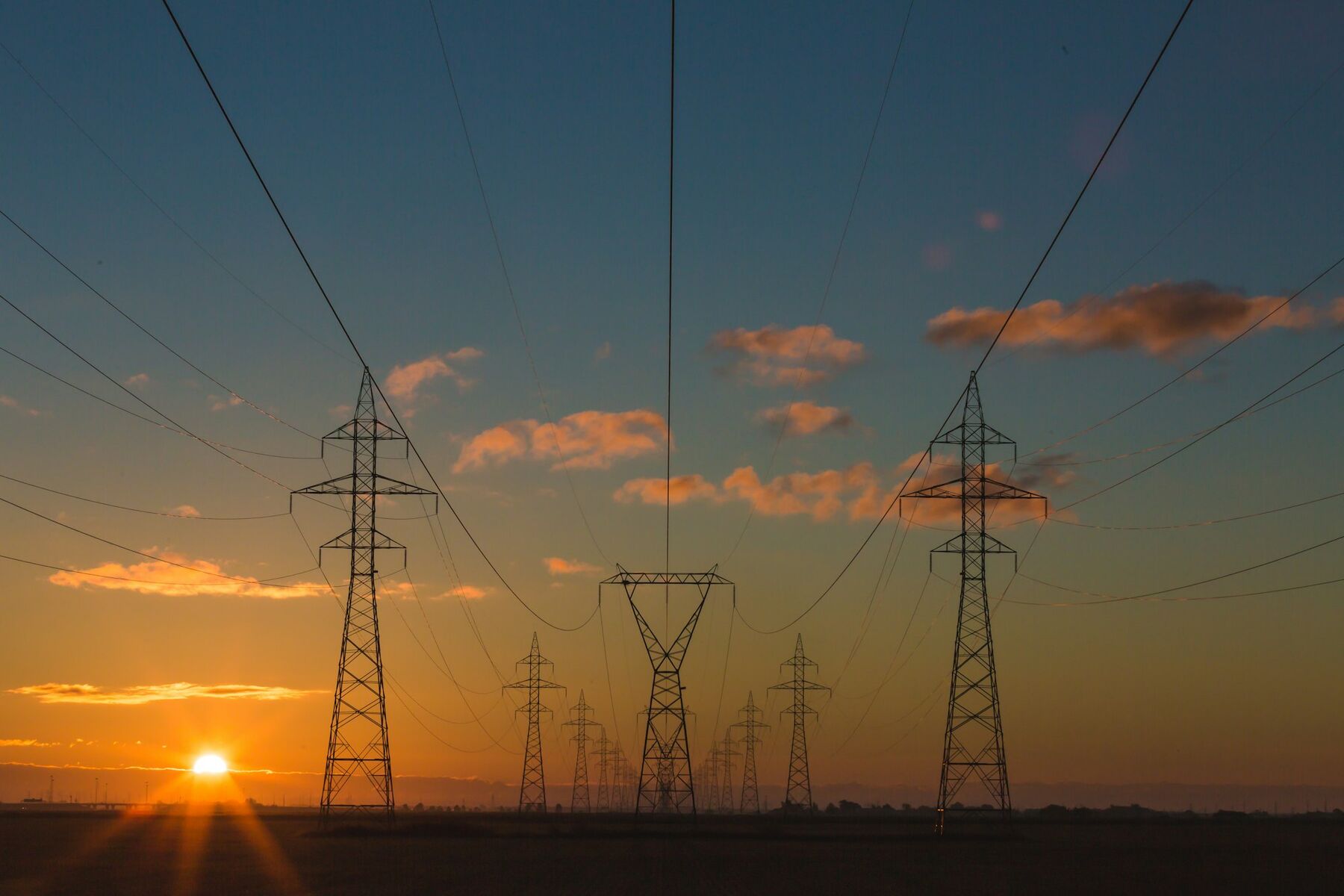
High-voltage lines — transmission infrastructure
Arena Energy — Resources — Grid Connection

Grid connection: the hardest stage of a renewable energy project in Poland.

Land alone is only half the story. Project success hinges on whether the operator issues grid connection conditions, and refusals are becoming more frequent. Below: the numbers, the procedure, and what can be verified before you commit capital.

01 — Scale of the Problem

The grid, not the land, is today's bottleneck

You can have the perfect plot: class V soil, flat, free of environmental constraints, with clean legal title, and still be unable to build anything on it. The reason is a refusal to issue grid connection conditions, the most common reason renewable energy projects in Poland are abandoned.

Operators refuse not because the project is flawed, but because there is no more capacity available to allocate at that particular grid point. The scale of the problem is growing year on year.

  • 2020: 1 322 refusals, totalling 6,2 GW of requested capacity.
  • 2021: 3 751 refusals, 14,45 GW.
  • 2022: 7 023 refusals, over 51 GW.
  • 2024: 7 817 refusals, 73,58 GW — including 4 443 due to lack of technical conditions (33,5 GW) and 2 196 for economic reasons (12,63 GW).
  • 2025: over 107 GW of capacity from applications that ended in refusal.
02 — Why This Happens

Capacity is reserved even though it has never been built

This is the point most often misunderstood by investors from outside Poland. The grid is not full of energy actually produced; it is full of reservations.

~240 GW
capacity reserved under issued grid connection conditions, according to the Ministry of Energy (Ministerstwo Energii)
150 GW
of which relates to renewable energy sources
90 GW
of which relates to energy storage
38,9 GW
actually installed renewable capacity in Poland (end of February 2026)

The gap between 240 GW of reservations and 38.9 GW of actual capacity illustrates the mechanism. Grid connection conditions are valid for two years, and a significant share of projects never materialise. Yet during that time the capacity remains blocked and unavailable to others. In practice, this means that free capacity at a given grid point appears periodically, and whoever has legally clean, ready-to-go land at that moment wins.

03 — Procedure

What the grid connection path looks like

The legal framework is set out in Article 7 of the Energy Law Act (Prawo energetyczne). Below is the realistic course of events for a utility-scale project.

  • Distance is not capacity. A line running across the plot doesn't mean you can connect to it. It may be overloaded, have short-circuit constraints, or require costly reconstruction.
  • Cable pooling. Regulations allow a single connection point to be shared between installations with complementary generation profiles, most often wind and solar. This is a realistic way in where a standalone application would be refused.
  • Energy storage changes the equation. A battery energy storage (BESS) makes it possible to reshape the profile of power fed into the grid, which can sometimes be the decisive argument for issuing conditions.
  • Cost is not just the connection fee. The financial model must include building the substation, the cable line, network reconstruction, establishing a transmission easement, and curtailment costs.
  • The transmission easement can become a bottleneck. The cable often has to cross land belonging to third parties. Without consents and entries in the land and mortgage register, there is no building permit.
04 — Five Things Discovered Too Late

What you won't see in a plot listing

Each of these points can upend a project's schedule or financial model. All of them can be checked before signing anything, which is exactly what land due diligence is for.

See the scope of our due diligence
05 — Outlook

The grid is expanding and that changes the calculation

Transmission operator PSE has prepared a transmission grid development plan for 2027–2036, with an estimated value of approximately PLN 66 billion: 5 000 km of new 400 kV line routes, 30 new substations, and the expansion or modernisation of 110 existing ones.

~45 GW
solar power evacuation capacity the plan is intended to enable
19+ GW
from onshore wind farms
~18 GW
from offshore wind farms
~160 TWh
annual renewable energy output achievable over a 10-year horizon

The practical takeaway for investors is this: the map of available capacity will keep changing over the coming decade. Land secured today near a planned substation may, in three years' time, become a location that draws competition. Conversely, a plot bought solely because it was cheap, without any grid analysis, may never see a project realised.

Full report on the renewable energy market in Poland
06 — Our Role

How we limit this risk

We don't issue grid connection conditions; that's the operator's job. What we can do is make sure you don't commit capital to land that will never be connected.

07 — Next Step

Have a location but aren't sure it can be connected?

We'll check the grid, legal status, and planning conditions before you commit capital. The initial verification is free.

Let's talk about your project
08 — Sources and Disclaimers

Where this data comes from

Data on grid connection refusals comes from the annual compilations of the Energy Regulatory Office (Urząd Regulacji Energetyki, URE), as reported by the industry outlets WysokieNapiecie.pl and Gramwzielone.pl. The information on approximately 240 GW of capacity reserved under issued grid connection conditions comes from the Ministry of Energy (Ministerstwo Energii). Data on installed capacity (as of the end of February 2026) and PSE's transmission grid development plan for 2027–2036 come from these institutions' announcements.

The deadlines and the amount of the advance payment derive from Article 7 of the Energy Law Act (Prawo energetyczne). The regulations in this area have been amended multiple times in recent years. Before filing an application, the legal status as of the relevant date should be verified.

This material is for informational purposes only and does not constitute legal or investment advice. The figures are indicative and are intended to illustrate the scale of the phenomenon, not to model a specific project. Conditions for each location are determined by the relevant network operator in an individual proceeding.